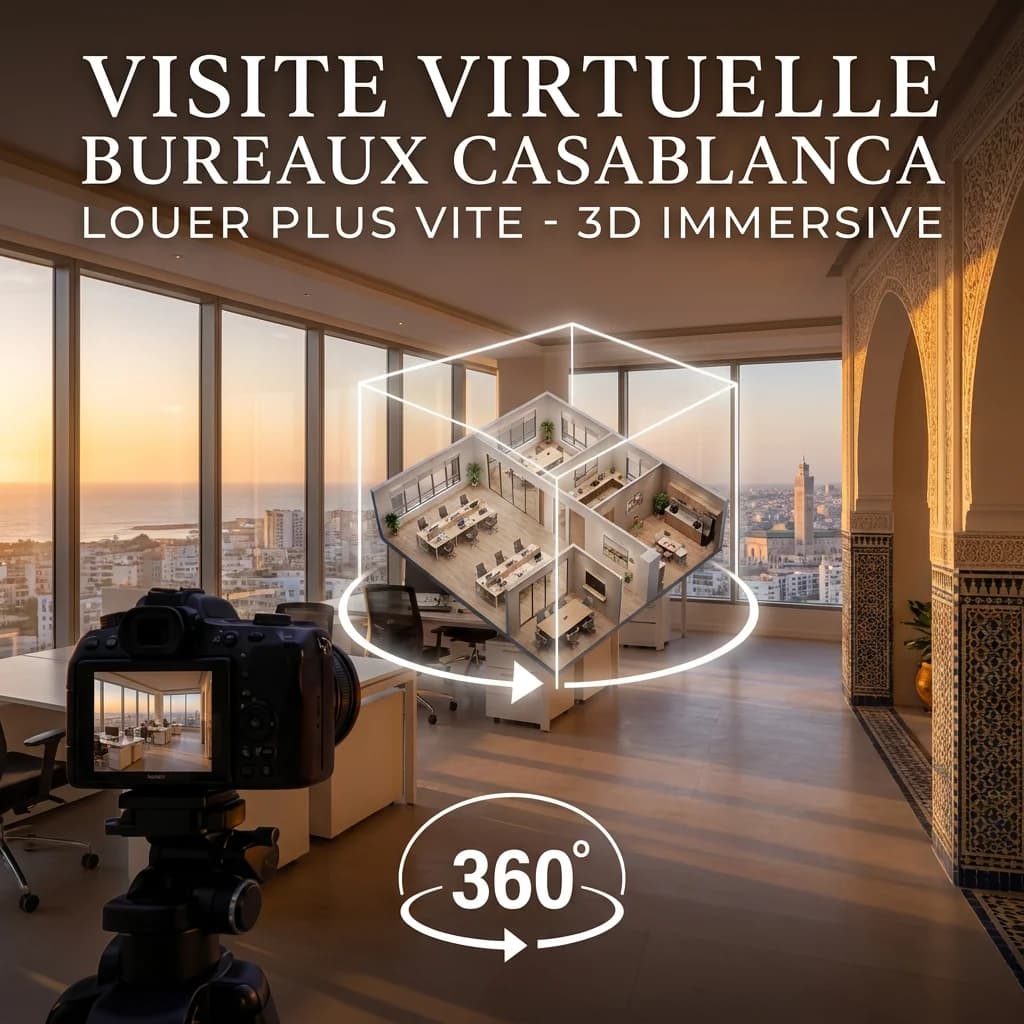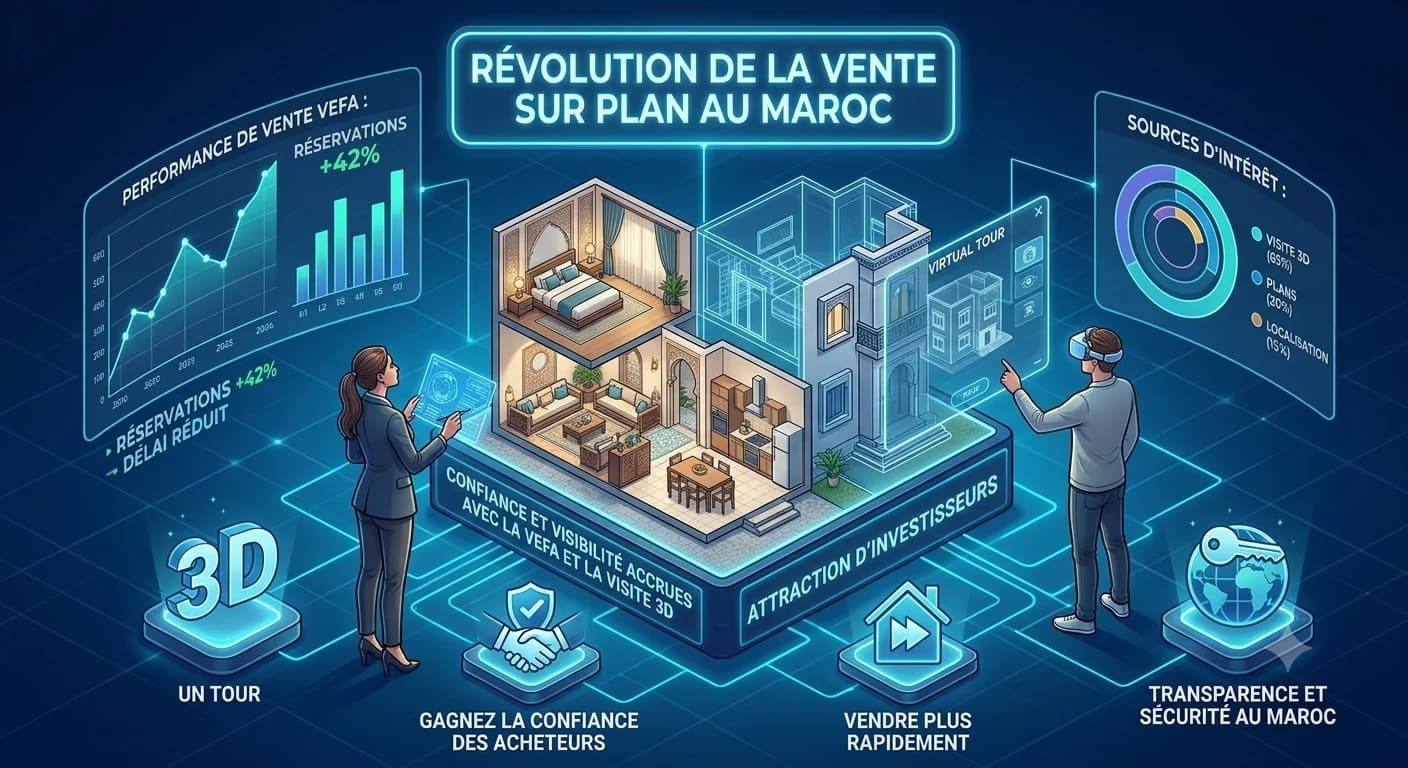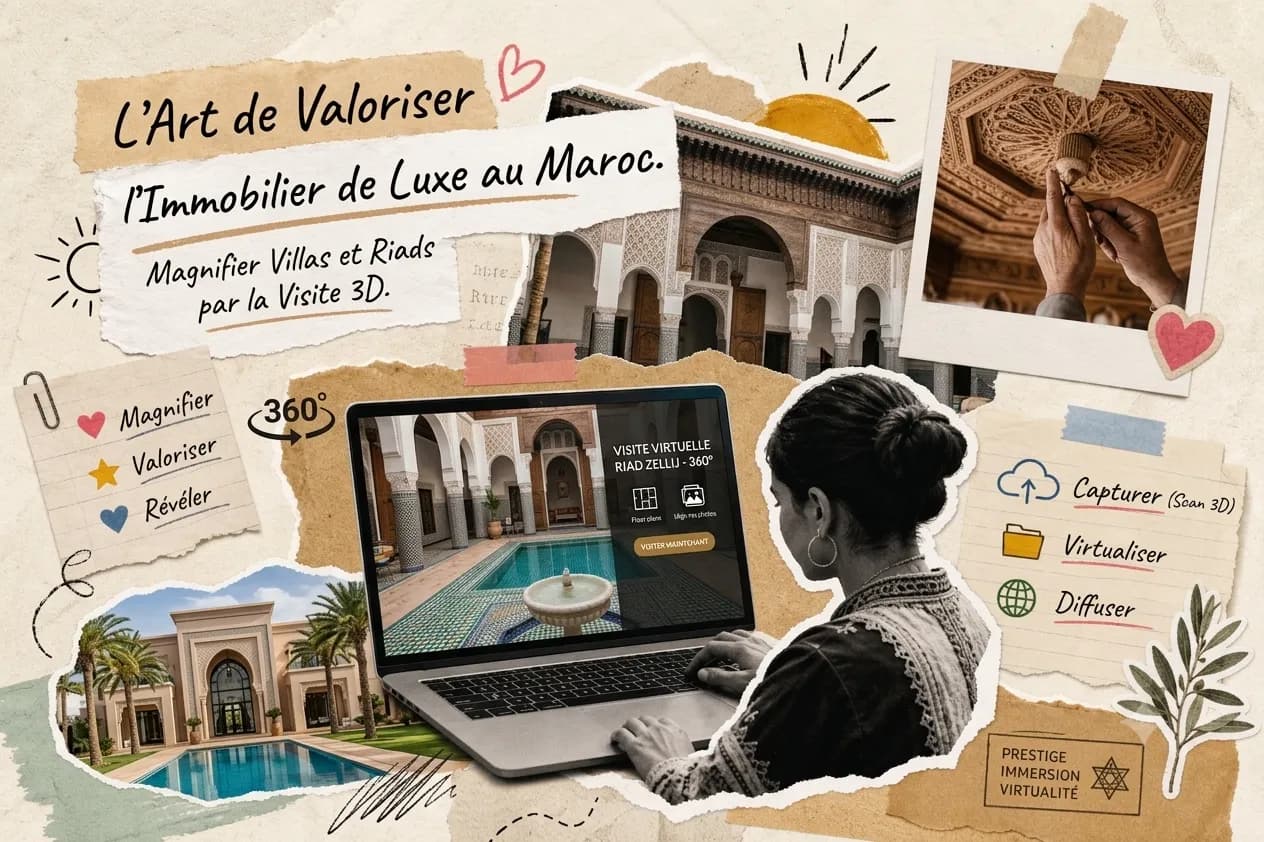

Every summer, thousands of Moroccans living abroad try to rent an apartment in Casablanca, Rabat or Tangier before ever setting foot in Morocco. The scenario is always the same: a cousin or friend goes to "take a look," snaps two or three photos on their phone, and the future tenant has to decide based on that — often within days, sometimes without ever viewing the place themselves before signing the lease. Renting property in Morocco backed by a virtual tour changes that equation entirely.
This is exactly the situation where a 3D virtual tour changes everything: it lets a tenant or buyer in Paris, Brussels or Montreal view a property in Casablanca as precisely as if they were standing in it, without relying on someone else's eyes.
The specific problem with remote rentals
Unlike a purchase, a rental decision has to move fast: good properties get snapped up within days, and members of the Moroccan diaspora often can't wait for their next trip home to decide. As a result, many sign a lease based on a handful of inadequate photos, risking the discovery of an apartment that's smaller, darker or laid out differently than they'd imagined.
A 3D virtual tour removes most of that uncertainty. A prospective tenant can move virtually through every room, check real distances between imagined furniture and walls, assess orientation and natural light, and compare several properties in one evening from their sofa — without depending on anyone's availability on the ground. An analysis of digital marketing for real estate in Morocco notes that this feature is particularly valuable for Moroccans living abroad who want to invest in their home country without traveling for every viewing, which considerably widens an agency's pool of qualified prospects.
A strong sales argument for agencies serving the diaspora
Real estate agencies working with the Moroccan diaspora abroad have every reason to offer a 3D tour as standard for every rental or sale listing aimed at this audience. It's an immediate point of difference against competitors still relying on photos alone, and it dramatically cuts down on endless WhatsApp exchanges trying to describe each room verbally.
Building trust without extra intermediaries
Another often-underrated benefit: a virtual tour reduces reliance on a trusted third party on the ground. The client no longer needs to ask a family member to check the property's condition before committing — they can explore every corner themselves, zoom in on bathroom finishes, or check the state of a fitted kitchen. Some estimates put avoidable unnecessary viewings as high as 70% thanks to this kind of upfront filtering — a figure that matters even more when the physical viewing involves an international flight.
Which channels work best for reaching the diaspora
Communicating with the Moroccan diaspora doesn't always run through the same channels as with a local audience. Community Facebook groups organized by home city or country of residence remain very active for rental listings. Instagram works well for building an agency's reputation over time, while WhatsApp remains, in practice, the final conversion channel: that's where details get negotiated, virtual tour links get sent, and remote or power-of-attorney signing appointments get arranged.
Studio, apartment, villa: adapting the tour to the property type
A furnished studio aimed at a young member of the diaspora shouldn't be presented the same way as a family villa aimed at a couple planning a permanent return home. For a studio, the priority is showing the full layout and natural light quickly, within a few minutes of tour time. For a villa, the virtual tour benefits from an interactive 2D floor plan and a room-by-room progression that captures the flow between floors, the garden and outbuildings — details that carry real weight for a buyer who may not be back in the country for months.
How much does a virtual tour cost for a rental property
For a furnished rental apartment, a 3D capture typically costs between €120 and €250, an amount that pays for itself quickly the moment it avoids a month of vacancy or a last-minute cancellation after a disappointing in-person viewing.
A use case that goes beyond seasonal rentals
The same principle applies to second homes, riads intended for long-term rental, and even jointly inherited family properties, where several heirs scattered across different countries need to agree remotely on a property's value or use. A shared 3D tour becomes a common reference point — the same for everyone, regardless of time zone. For upscale properties aimed at this same international clientele, our article on luxury real estate and riads covers a complementary angle.
What if a tenant backs out after seeing the virtual tour?
This is the most common worry on the agency side: does showing "too much" upfront scare off candidates who, in person, might have signed anyway for lack of alternatives? In practice, the opposite tends to happen. A candidate who backs out after an honest virtual tour would likely have backed out after a disappointing physical viewing anyway — except by then everyone's time would have been wasted, and the property might have been held off the market for other serious candidates for several days. A virtual tour doesn't create extra cancellations: it simply moves them earlier in the process, before the property gets reserved instead of after.
What to prepare before the capture session
For a rental property, a few simple preparations noticeably improve the final result: tidy and air out each room, open all shutters to maximize natural light, remove overly personal items if the owner still occupies the space, and make sure the amenities highlighted in the listing (air conditioning, water heater, appliances) are visible and in working order. A well-prepared property at the time of capture avoids unpleasant surprises for the tenant once on site, and the "this isn't what I saw online" disputes that come with them.
Why an interactive 2D floor plan matters for a rental property
Beyond room-by-room navigation, an interactive 2D floor plan layered onto the 3D tour is especially helpful for a remote tenant trying to understand an apartment's overall layout — something photos, however numerous, never quite convey. A tenant can check at a glance whether the main bedroom faces the street or a quieter inner courtyard, whether the kitchen opens onto the living room, or whether the toilet is separate from the bathroom — details that often weigh more heavily in the final decision than the total floor area listed.
Frequently asked questions about remote renting
Can a lease be signed entirely remotely after a virtual tour? Yes, provided you go through a notarized power of attorney or a local representative for the physical signing of the contract; the virtual tour secures the decision, not the legal formality itself.
Does a virtual tour replace a move-in inspection report? No, it documents the general condition at the time of capture but doesn't replace a formal inspection report signed by both parties when the tenant moves in.
How long does a virtual tour stay available online? The link stays active as long as the property is being marketed; it can be deactivated or updated as soon as a new tenant or buyer is found.
The bottom line
For agencies and owners renting or selling to an expatriate clientele, a 3D virtual tour is no longer a marketing gadget: it's the tool that replaces the physical viewing that simply can't happen remotely, following the same logic we cover in selling property faster in Morocco. Let's talk about your portfolio of diaspora-facing properties and figure out which ones deserve a 3D tour first.