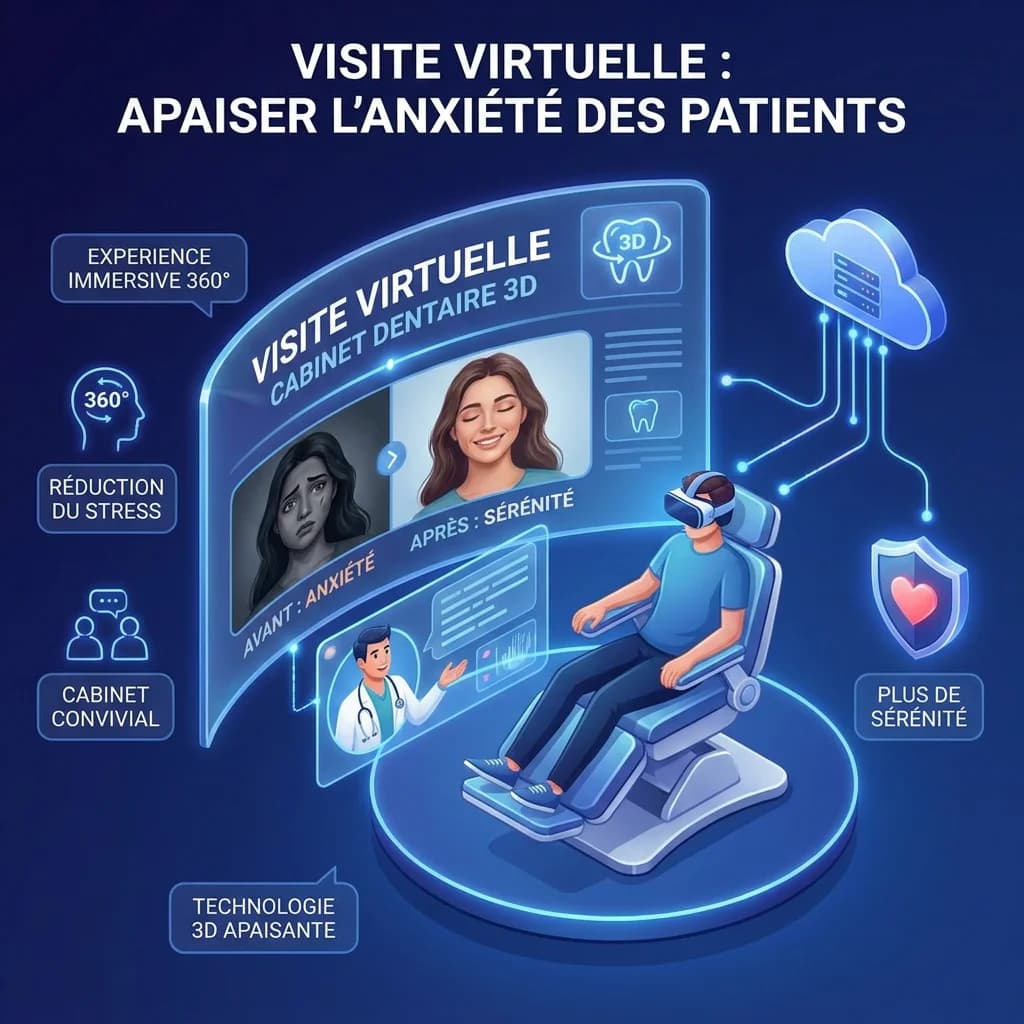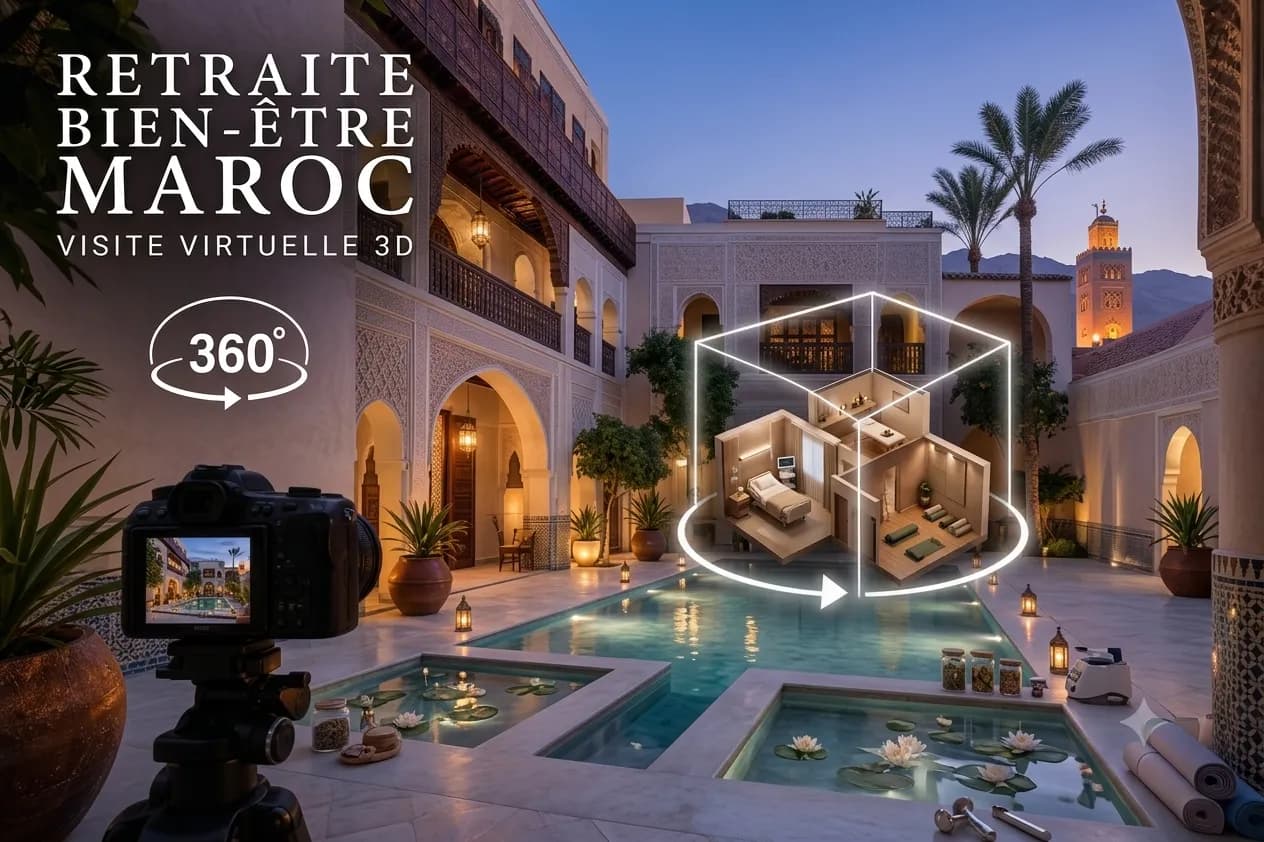
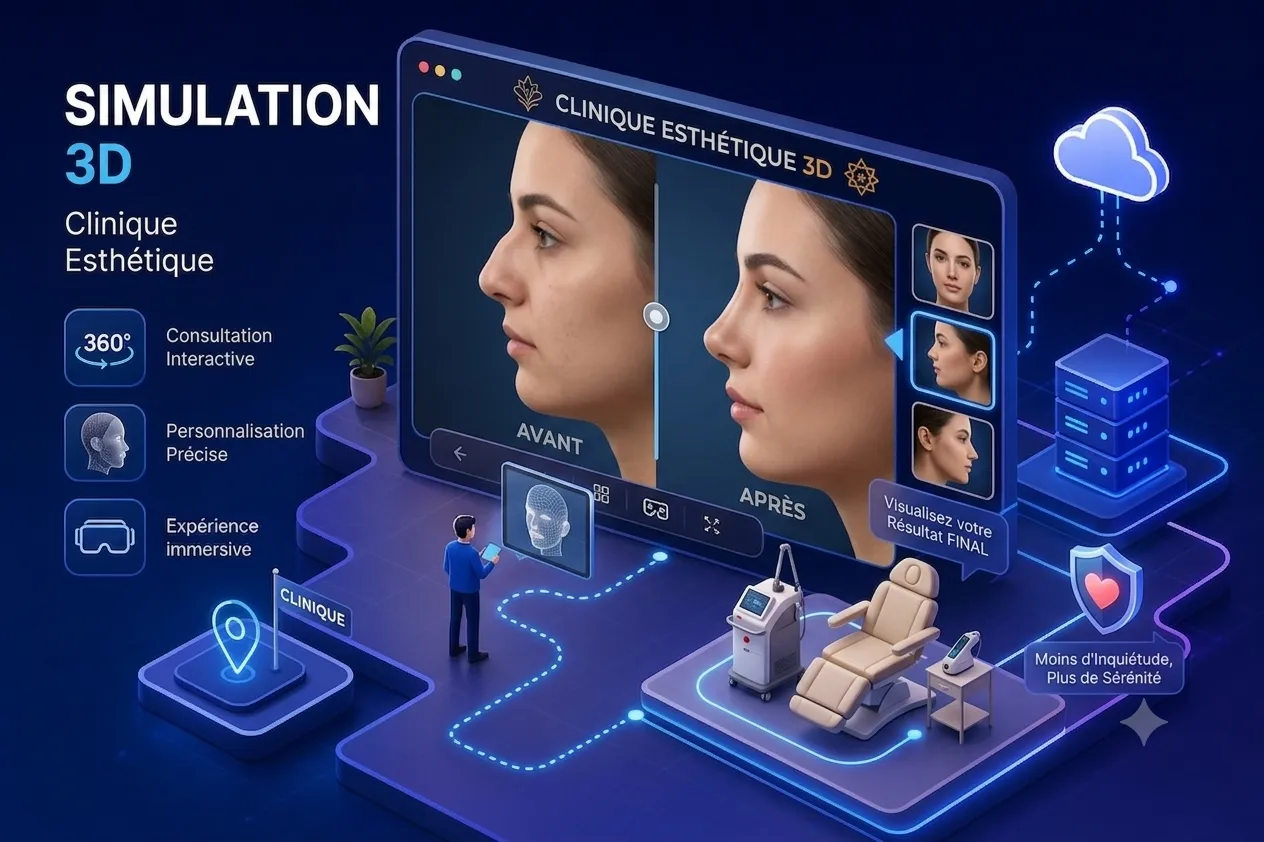
"What does the room actually look like?" It's the question almost every patient asks, in one form or another, before a first consultation at an aesthetic clinic. Any procedure, even a minor one, comes with a degree of apprehension, and the unknown — the location, the equipment, the general atmosphere of the practice — takes up a disproportionate share of that anxiety, well before the medical procedure itself even enters the picture. A 3D virtual tour for aesthetic clinics in Morocco answers that question directly, before the first phone call ever happens.
Aesthetic and wellness clinics that offer a 3D virtual tour of their premises address that worry directly, before the first phone call even happens.
Reducing fear of the unknown, not just showing off the space
Many healthcare professionals find that letting patients discover the care environment in advance — the waiting room, the consultation room, the general setting — helps them feel more at ease and reduces stress linked to the unknown. This principle, well documented in hospital settings through case studies like the real-world examples of virtual tours in medical settings, applies just as much to an aesthetic clinic: a patient who has already "visited" the space mentally arrives at their appointment more relaxed, with sharper questions about the procedure itself rather than about the setting.
This matters especially for clinics offering aesthetic procedures, often perceived as more personal or harder to discuss than a standard medical consultation. Being able to quietly explore the premises from your phone, without traveling there or asking potentially awkward questions, removes a real barrier to booking that first appointment.
A differentiator in a crowded market
In Casablanca and Rabat, the number of aesthetic clinics and cosmetic medicine centers has grown considerably in recent years. Many patients compare several practices before booking, relying mainly on the website and social media. A 3D virtual tour embedded on the homepage or shared as an Instagram story projects a professional, transparent image at exactly the moment a patient is still weighing their options.
What a virtual tour can show, unfiltered
Waiting room, treatment room, technical equipment, consultation booths: a well-designed 3D tour highlights cleanliness, modern equipment and the clinic's overall organization — details that, poorly communicated, can create doubt about a practice's professionalism even when the quality of care is beyond reproach.
A tool that eases the load on your front desk
An often-underrated side effect of a virtual tour: it mechanically reduces the number of calls whose sole purpose is asking what the practice looks like, where to park, or whether the premises are "clean and modern." A virtual tour built for the health and wellness sector frees up the front-desk team to focus on requests that genuinely need a human answer — medical questions, booking, post-procedure follow-up — instead of questions already answered by content available online.
A privacy question, properly handled
3D capture of a healthcare facility is carried out with no patients present, and sensitive areas — medical records, identifiable equipment, rooms in active use — are either excluded from the capture or edited out in post-production. You keep full control over what's visible in the final result before it ever goes online, including the option to blur certain elements or restrict access to specific areas within the published tour.
Distributing the tour without compromising patient discretion
Unlike other sectors chasing the widest possible reach, an aesthetic clinic has to work with an audience that values discretion. A virtual tour lends itself well to that balance: it can be embedded on the website and shared on request via a private link, without necessarily appearing in an ad campaign visible to a patient's entire network. This more targeted distribution, less "public" than a standard Instagram story, better matches this sector's expectations around privacy.
A concrete example: a multi-practitioner practice
For a practice bringing together several practitioners — a dermatologist, an aesthetic doctor, a specialized care nurse — a virtual tour offers an extra benefit: it clearly shows how the space is organized when the same patient needs to visit different rooms depending on which professional they're seeing. An interactive floor plan with points labeled by practitioner or treatment type keeps patients from getting lost on their first visit and, right from the moment they book, projects an image of professional organization.
How much does a 3D tour cost for a clinic
For a mid-sized aesthetic clinic (waiting room, two to four treatment rooms, reception), a capture typically costs between €200 and €400 — a modest amount compared to converting even a single new patient thanks to the trust built before their first visit.
Preparing the front-desk team for the virtual tour
Once the virtual tour is live, it's worth briefly briefing the front-desk team on it: it becomes a natural resource for phone answers ("you can already see our premises on our website, I'll send you the link") instead of verbally describing the practice's layout. Some clinics even embed the link directly in their appointment-confirmation SMS or email, letting patients get familiar with the space in the days before their visit rather than discovering it in the waiting room.
Frequently asked questions about clinic virtual tours
Do current patients need to be present during the capture? No, the session is scheduled outside consultation hours or during a gap in the schedule, so it doesn't disrupt patients or the care team's timetable.
Can sensitive medical equipment be blurred out? Yes, post-production editing can blur or mask any identifiable equipment before the final tour goes live.
Is a virtual tour worthwhile for a dental or general practice? The same reassurance principle applies to any specialty where apprehension about the setting weighs on the decision to book an appointment, not just aesthetics.
The bottom line
A 3D virtual tour doesn't replace the trust built during an in-person consultation, but it lays the first stone before a patient ever walks through your door. For centers built more around atmosphere and wellbeing than medical procedures, our article on spas and wellness centers covers a complementary approach. Let's talk about the best way to present your clinic to future patients.